


I want the record to show that I think this is dumb:
Shares of Allbirds (BIRD.O) surged more than five-fold on Wednesday after the footwear maker said it was raising capital and pivoting towards AI computing infrastructure.
The San Francisco, California-based company said that it would execute a $50 million convertible financing agreement with an institutional investor and plans to use the proceeds to acquire graphics processing units (GPUs).
Allbirds also plans to rebrand itself as “NewBird AI” and, over time, shift focus to offering cloud computing capacity and AI services, though it did not provide additional details on its new strategy.
…
The stock was last up 435% at $13.33, valuing the company at $116 million, according to LSEG data. Allbirds was also among the most active orders on Fidelity's trading platform on Wednesday, signalling interest from retail traders.
As of writing, actually, its closer to 500%.
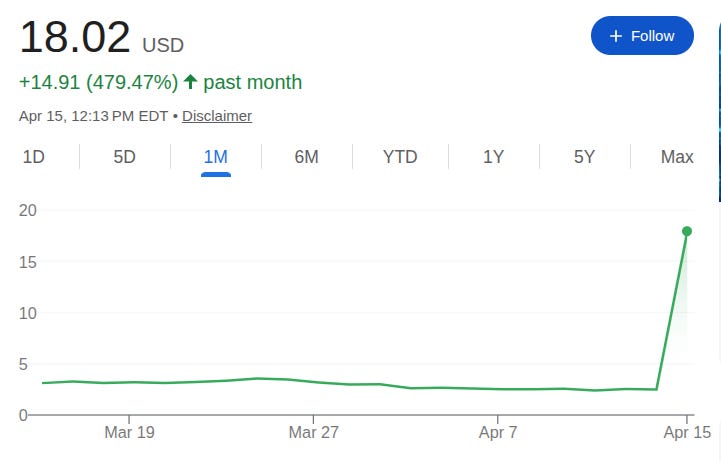
“SF based startup pivots to AI” is not, like, an uncommon headline in 2026. But normally those headlines are for
companies that are small and have a lot of room to pivot because they do not have a ton of customers
companies that are at least sorta kinda tangentially related to AI, or at least software
AllBirds is neither. It is a public company with over 500 employees that sells shoes. AllBirds spinning up a GPU arm is like SpaceX buying a social media company you know what nevermind.
If this whole thing reads like a Matt Levine bit, that’s because it is [EDIT: while I was writing this Matt beat me to it]. This is basically the same approach that MicroStrategy took with crypto / bitcoin back in 2020, that it has continued to double down on in the intervening years. According to wikipedia, MicroStrategy is a public company “that provides business intelligence (BI) and mobile software…to analyze internal and external data in order to make business decisions and to develop mobile apps.” According to anyone who has paid attention to the company since 2020 (including Wikipedia!), MicroStrategy is a pot of bitcoin that you can buy on the stockmarket.
In 2020, MicroStrategy went ‘this strategy isn’t working out, we need a new strategy’, and decided to go all in on crypto currencies, which, from 2020-2023, was a very hot thing.
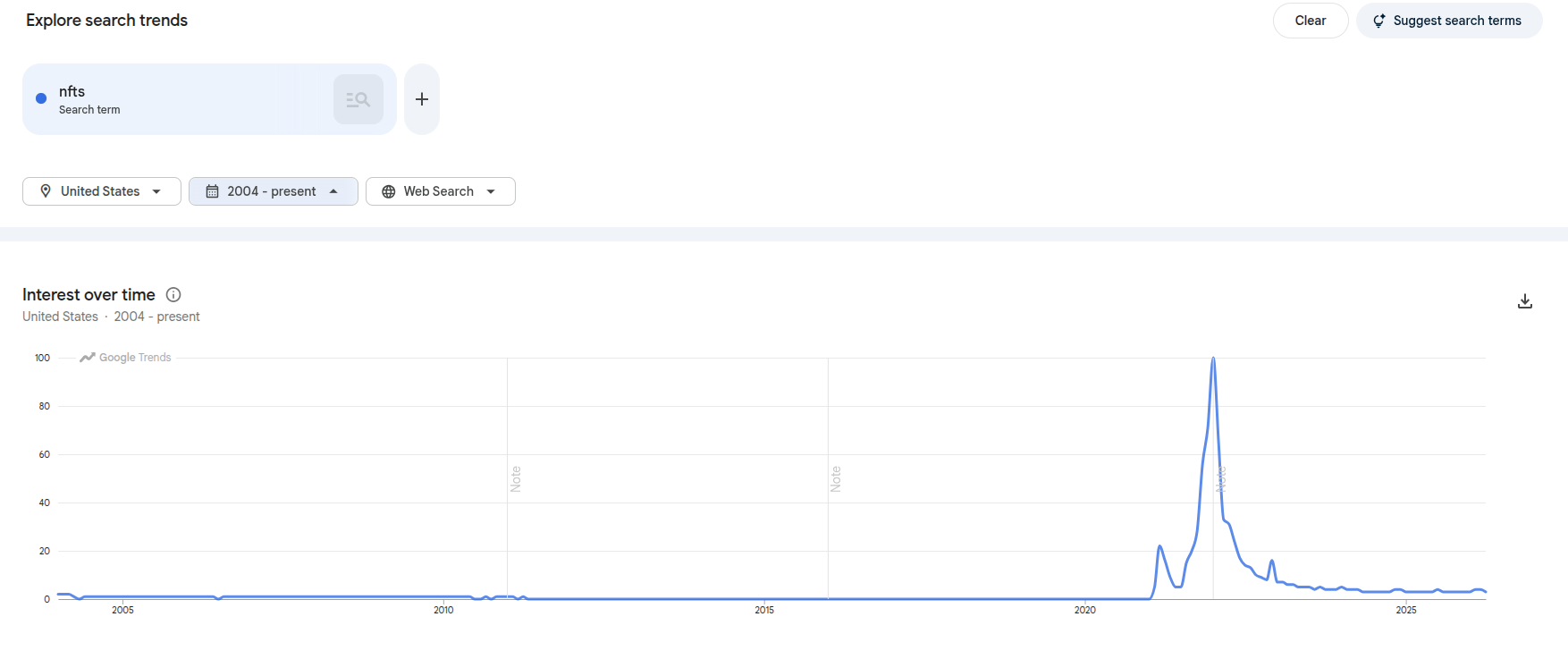
Funny enough, the value of MicroStrategy shares is worth more than the equivalent value of the bitcoin its holding! From Matt:
MicroStrategy is primarily a pot of Bitcoins, though it also has a software business that is grudgingly acknowledged in its earnings release.[3] The pot of Bitcoins is worth about $18 billion, according to that earnings release, and is funded partly with debt; MicroStrategy reports about $4.2 billion of long-term debt.[4] This suggests a net asset value of, you know, $14 billion? Plus or minus 50%? Its market capitalization is about $50 billion.
I don’t really know what to make of this, except to say that this feels dumb and perhaps this is why I am not in finance.
This is also, by the way, the same thing that Kodak tried back in 2018. Do you guys remember KodakCoin?
Now, the 130-year-old company is trying an unlikely sort of comeback — one built by betting on cryptocurrency. It’s a bold gamble that has excited some investors, perplexed others and raised questions about how closely Kodak vetted its cryptocurrency business partners, who now include a paparazzi photo agency, a penny-stock promoter and a company offering what has been called a “magic money making machine.”
This month, Kodak lent its name to a digital currency called KodakCoin, which is billed as “a photo-centric cryptocurrency to empower photographers and agencies to take greater control in image rights management.” The basic idea behind KodakCoin is to use the blockchain to help photographers manage their collections by creating permanent, immutable records of ownership.
And it worked for them too! At least, until it didn’t.
Does the partial success of MicroStrategy / Kodak mean that this is a great idea for AllBirds? Again, I am not in finance. AllBirds is clearly struggling, and I don’t blame them for throwing a hail mary. But there is something silly about just being able to whisper the word ‘AI’ near a public stock and have the price go shooting up. The conventional wisdom in the startup world is that successful businesses are run by people who deeply understand the problem space they are operating in. You have to have a lot empathy for the user in order to build something useful. The AllBirds folks have spent years and years thinking about shoes. Do they really understand GPUs? Again from the Reuters article linked above:
“It looks like an attempt to capitalize on the AI movement. I don’t see how Allbirds brings anything to the table beyond name recognition,” said Bruce Winder, an independent retail consultant.
It’s not even clear the name recognition helps, because, again, people associate AllBirds with shoes and not AI.

The only kind of financial theory where any of this makes any kind of sense is if you see GPUs themselves as a store of value. You buy a pot of GPUs because you think that the future demand for them is going to be stable enough that it can act as a reserve for your organizaton/business/government.
Traditional stores of value include gold and actual currencies like USD. People have floated that bitcoin itself is a store of value — because it is fully decentralized and has a fixed supply, in theory it should retain value as long as bitcoin itself is deemed useful (and I do tend to think bitcoin will basically always be somewhat useful, I’ve written about some of that here). More recently, Sam Altman has been pushing the idea of compute as a store of value (cf ‘universal basic compute’) and others have spoken about compute credits as an asset class.
This of course raises the question: are GPUs a good store of value?
Hahahahahahahaha no. No of course not.
I was born in the mid 90s. A dollar back then is worth about half as much as it is today, a 50% decrease. Around when I was born, the top of the line best CPU was the Intel Pentium Pro. This thing would sell for $1168 back then, so lets say ~2k today. Do you know how much an Intel Pentium Pro goes for today? Well, they don’t make the things anymore, so you have to get them used, which costs like $80. This is, what, a ~99% depreciation? Despite the fact that global demand for compute has gone up a trillion-fold?
People like to talk about ‘compute’ and investing in ‘compute’ as if you can somehow get exposure to the abstract platonic concept of running electricity through silicon. Unfortunately, compute is tied to real world assets that depreciate very quickly. Just because everyone needs it does not make it a good store of value (see also: oil).
I can kinda sorta see how compute credits may be a reasonable store of value. You can get AWS credits and then be guaranteed some abstract floating amount of compute that will float on top of the depreciation of the underlying machinery. $2000 of compute in 1995 will buy you a single Intel Pentium, which is useless today. But $2000 of compute credits in 1995 will, in theory, get you $1000 of compute today, which is actually still pretty good!1
But this is basically just like saying gift cards are a good store of value, because that’s what a compute credit is. Like, yea, I guess gift cards do trade on a secondary market, but they are always discounted to their dollar value because they price in the likelihood of the company going under and the limitations on purchasing. You can buy a $100 Carnival Cruise giftcard for $93 — a 7% discount — because you basically never need to buy things from Carnival Cruise. Meanwhile, a $50 Amazon giftcard goes for $49.75 because it’s basically as good as money. At which point…you might as well just use money.
Anyway, I don’t expect the ‘buy a bunch of GPUs’ strategy to go well for AllBirds, but fingers crossed — they made comfy shoes, so I hope they succeed.
[EDIT: some friends mentioned that this is basically a spac, where the value of AllBirds is essentially that it is already a public company and so can skip the usual SEC filings and so on of taking something else public, and I also agree with that analysis]
A t2 medium costs about $550 for three years, so call it $1000 for 6 years. The CPU running in a t2 medium is generally an Intel Ivy Bridge or Broadwell. These things have a ~3GHz clock speed, which is 15x the 200MHz speed of the Pentium.
Hilarious!
My first thought is they read Ben Stancil's post here, where he advocates one of the Big 3 buying Allbirds as a foundation model training gym for running a real business, complete with a decade of real business data:
https://substack.com/inbox/post/193090779
Clearly this AI pivot is just a Straussian a head fake on their road to a Big 3 acquisition! 😂
The only caveat I’d have to this is that as I understand it, a lot of the traditional deprecation calculations aren’t actually applying to GPUs in the same way. This is the analysis that Michael Bury made that predicted a huge crash because AI companies were massively overestimating the deprecation rate of the hardware, but as I understand it this isn’t actually the case - in many cases years old TPU and GPUs are still at high utilisation rates and making money because the demand for tokens is so high. If that’s right, maybe investing in GPUs as a store of value makes sense?