

Previously: Notes from the SF Party Scene
Scott Alexander writes an excellent series of posts about Bay Area house parties. He’s written more than a half-dozen at this point. They all involve the straight-man audience/scott-insert (and the only sane man left alive, apparently) entering some strange lovecraftian event that, if you squint, could be called a house party. The weirdness of the event is, of course, the satire. Everyone else seems totally oblivious that they are the joke. These parties are completely and totally ridiculous, and any reasonable reader would assume that Scott is simply embellishing or straight up making up details and that these parties are not really real.
Which is why I am concerned that people do not believe these parties are really real.
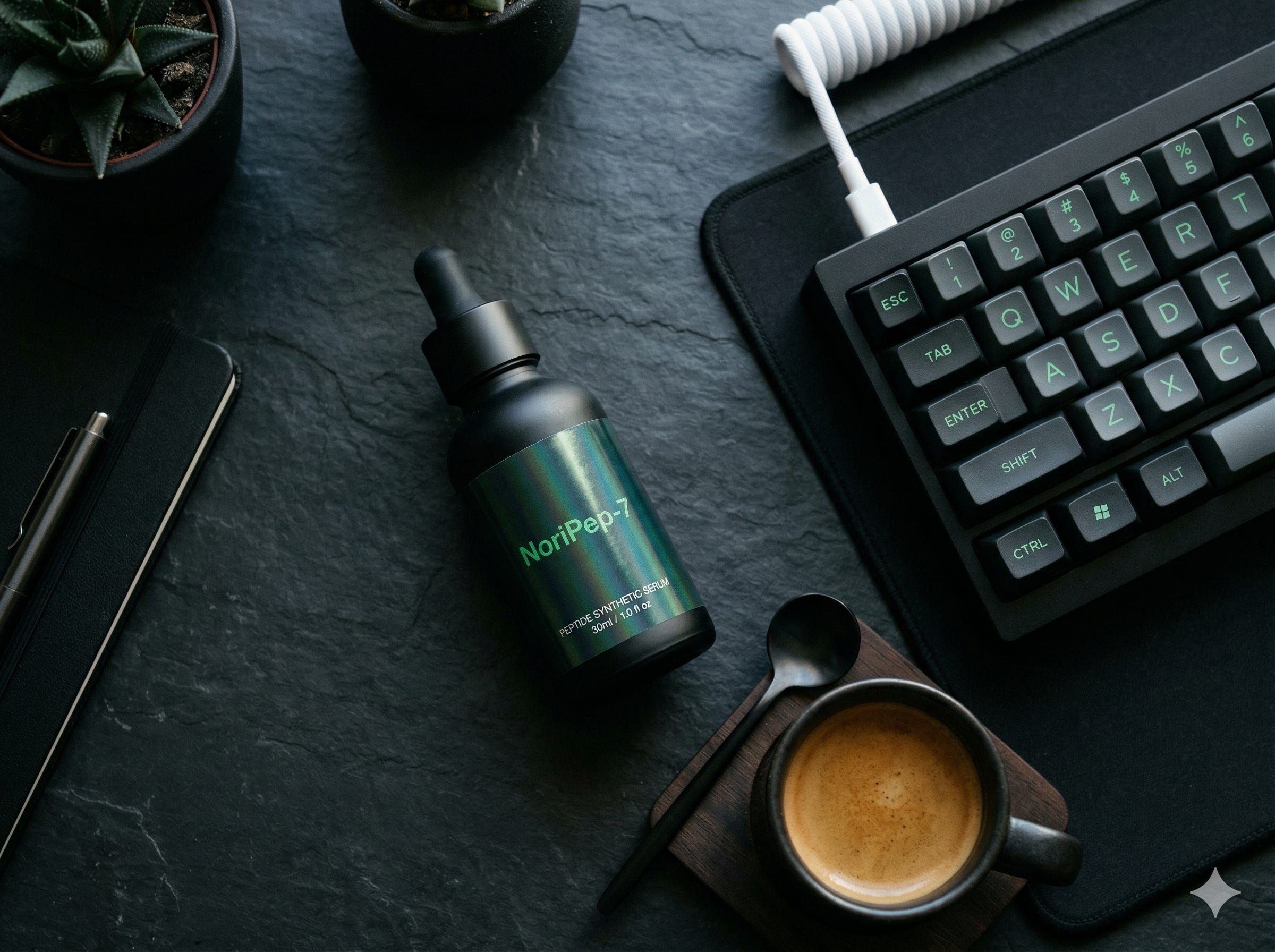
Two weekends ago I was doing my quarterly trip to the Bay. I was invited to a spring gay peptide party.
O, sorry, you don’t know what peptides are? Wow, really behind on the times. AI is pretty lame in the Bay these days, because everyone is just swimming in it. People ask each other ‘what do you do? (for work)’ and if you say ‘O I work in AI’ they’ll look at you like you just said you’re best friends with Curtis Yarvin — who is now, by the way, deeply uncool (more on this later). Of course you work in AI, everyone works in AI. Saying you work in AI is like saying you work in tech, it’s already priced in. Which of course makes the phrase ‘I work in AI’ the least useful / interesting thing ever. I had at least three people give me a pitying glance before someone kindly informed me that since AI was obviously going to take over everything, it just wasn’t interesting to talk about.
Peptides. Now peptides are cool. And not just any peptides, but “cheap Chinese peptides.” I heard the phrase “cheap Chinese peptides” at least a half dozen times from as many people during my trip to the Bay, and I was only there for 2 weeks.
I have a bit of a molecular bio background so everyone being really into ‘peptides’ was a bit of a ‘wtf is going on’ moment for me. For those who don’t know, a peptide is a completely unspecific term. Saying that you are really into ‘peptides’ is about as specific as saying you’re really into ‘proteins’ or ‘molecules’. “Ah yea I’m really into those Chinese molecules these days” just doesn’t hit the same does it? A Chinese friend of mine quipped that he was also very into Chinese peptides, all things considered. From what I could gather, peptides-as-used-in-the-SF-party-scene are injectables like semiglutide (i.e. Ozempic). Most of them are for weight loss, but some folks swore that they had peptides for everything from skin rejuvenation to better sleep health.
So what is a spring gay peptide party? Well, the party was peptide themed in that
Everyone seemed to be on them
They had extremely strong jello shots being served out of big syringes
At least one person but possibly multiple people were injecting each other with peptides at the party
And also most of the guests were gay (obviously) and it was also spring.
At one point I was in a conversation with no less than 4 other founders who were all building peptide companies. I could fill a notebook of quotes from this conversation. “They change your personality, it’s literally made me less shallow knowing that we can just looksmax you.” “Ugliness is just a choice now.” “I shot up a twink with ozempic who did not need to lose any weight.”
My favorite exchange by far was between a guy in a sailor cap and another guy in a long black leather trench coat (it was pretty warm out).
Goth: “What peptides are you guys on?”
(crowd mumbles some answers)
Goth: “Wait are you using that one, reta?”
Sailor: “Everyone is doing street reta.”
Goth: “Wait so you actually do it?”
Sailor: “I’m on tirz too.”
Goth: “You do both?”
Sailor: …
Sailor: “I’m on a lot.”
The pause gets me every time.
Fun fact, Scott actually first mentioned peptides back in January, also in the context of a bay area house party!
Sam types in spaghetti bolognese, delicious, scrumptious, meaty, trending on DoorDash, --dangerously-skip-parmesan and hands it back to Tran, who clicks ORDER.
“Nothing for you, Tran?”
“Nah,” says Tran. “I’m on Chinese peptides. Retatrutide, GLP-1 receptor agonist plus a bunch of other downstream effects.”
“Oh,” you say, “interesting. I’m still on tirzepatide, but I’d love to learn more. Where did you learn about suppliers and doses and stuff? Was it the locked Cremieux post?”
“Cremieux’s post is okay, but there’s a lot of tacit knowledge that didn’t make it in there. I’m actually working on a guide to all the GLP-1s. I’m calling it If Anyone Builds It, Everyone Diets.”
So he is way ahead of the game.
I suppose this is one of the downsides (upsides?) of living in NYC instead of the Bay. Although maybe that didn’t matter as much as I thought. Almost everyone I met was from NYC. “O yea, I’m just in town visiting” starts to feel a bit surreal after the 4th time. Even the host was visiting! It wasn’t even his house!
In college, my freshman year floor had a little motto: “always double down.” It’s a bit like the improv ‘yes and’. No matter what was happening, no matter how ridiculous the conversation was, you always double down. So normal chit chat would rapidly spiral into insanity that everyone would play with a straight face, which would often form the basis of recurring bits.
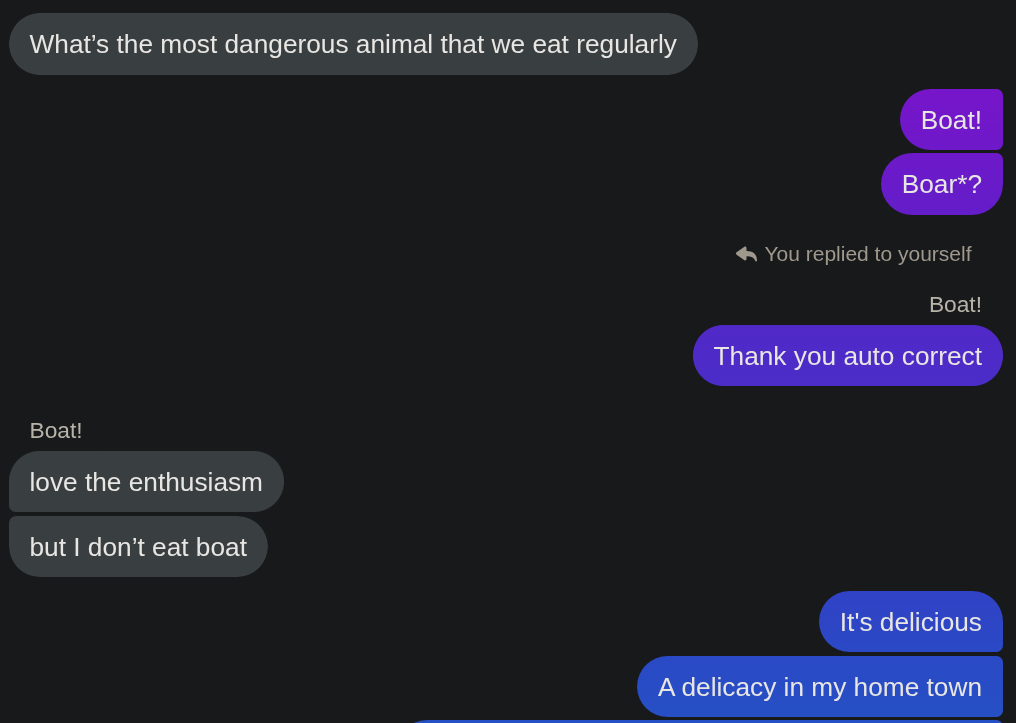
This was, of course, all a bit edgy and a bit cringe, but it was also a lot of fun if you were able to maintain a bit of ironic distance from the whole thing. It worked because everyone knew you weren’t serious.
I feel like SF is what you get when you take that motto and apply it really really seriously. You can’t just be taking ozempic, you have to be on reta, no, street reta, no cheap Chinese street reta, and also on tirz too! Or take the AI thing. Even though I’m generally concerned about AI, I’m not about to start a death cult that murders AI researchers.
What’s hard is that there clearly are some people in SF who are in on the joke, and who are purposely exaggerating precisely to get a rise out of the people who are taking everything seriously. (Maybe this is all the visiting New Yorkers?)
Someone once said that SF is a town of extremely high sincerity, and all of its modern and historical weirdness — the AI doomerism, the cults, the hippies, the drug use, the polycules — is downstream of people saying things and other people taking them extremely seriously. So you have people who are on way too many peptides. But that same high sincerity is also what makes SF so great. In my last post, I wrote
San Francisco is a city of dreamers. It's core enterprise is creating magic. And as a result, the town values the individual. It exalts archetypes — the founder, the builder, the prodigy. The question that people ask is "who are YOU? What are you interested in? How are you going to change the world?" Social life in SF is grounded in these questions…
You can never get the crazy valuations and capital necessary to build OpenAI in New York. Partially, that's because the appetite isn't there, it's too speculative. And partially, it's because the default mood is one of pessimism. "You think you can change the world? Who do you think you are?" People aren't on a mission in NYC, the way they can be in SF. They want to make money, sure. But maybe not change the world.
In some sense, a startup can only happen in an extremely high sincerity environment. If a 14 year old says that they are going to change the world, they are being very sincere even if an ‘adult’ knows that the likelihood is low. It takes an equally sincere kind of person to double down on that energy. But that’s SF in a nutshell. So, yes, you get crazy peptide gatekeeping, but you also get amazing things like self driving cars and the LGBT movement and YIMBYism and so on.
By contrast, I think NYC thrives on irony. Which sometimes leads to some funny / awkward moments, where I’d make a joke and someone else would take me at face value. For example, I recently posted an April fools joke on LinkedIn about firing my team and switching from building off the shelf background agent runtimes to “AI powered peptides”, and at least three people messaged me congratulating me on the pivot.
One last thought on house parties: citrus.
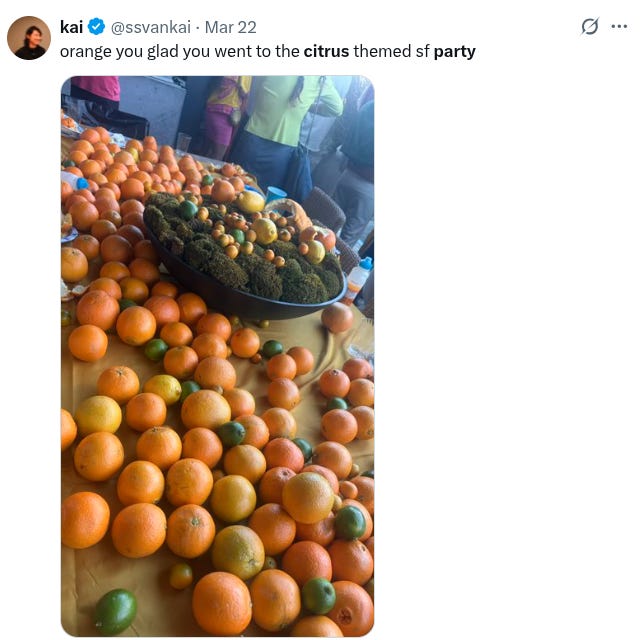
When Mia and I were in SF we got invited to a fruit themed party. Specifically, citrus. Everyone had to wear citrus clothes, you’d be turned away by a bouncer if you weren’t. There were oranges everywhere. Apparently the big theme was that you had to find a kumquat that was hidden somewhere in the house? Very unclear what you would win if you got the kumquat. I think just respect.
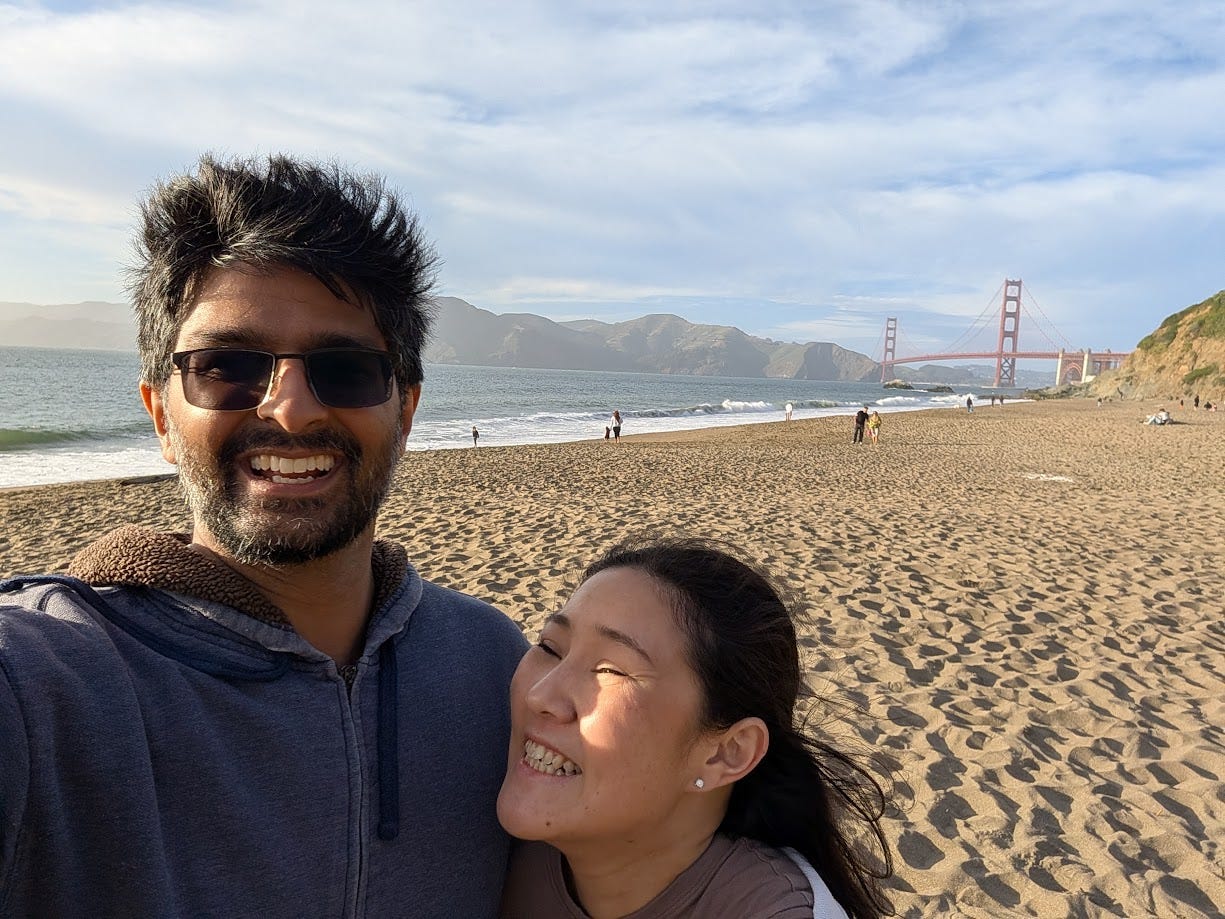
We seriously considered going — we coincidentally knew a lot of folks on the guest list — but decided to blow it off in favor of walking around the city. We walked a lot. On Sunday we walked from the ferry building to Baker’s Beach, all along the coast; on Monday we walked from Chinatown to the end of Golden Gate Park (which, by the way, is confusingly not where the golden gate bridge is).1
But maybe we should’ve gone to the party. Little did we know, this citrus party would go soft viral. Over the course of the next week, I met two dozen independent and unconnected people who had all heard about this citrus party. Some thought it hilarious, some thought it stupid, but all of them were talking about it. I’m sure the host was quite happy with himself (I know you’re reading this, proud of you king!)
Am I cool for having been invited to the citrus party? Am I cooler for not having gone?
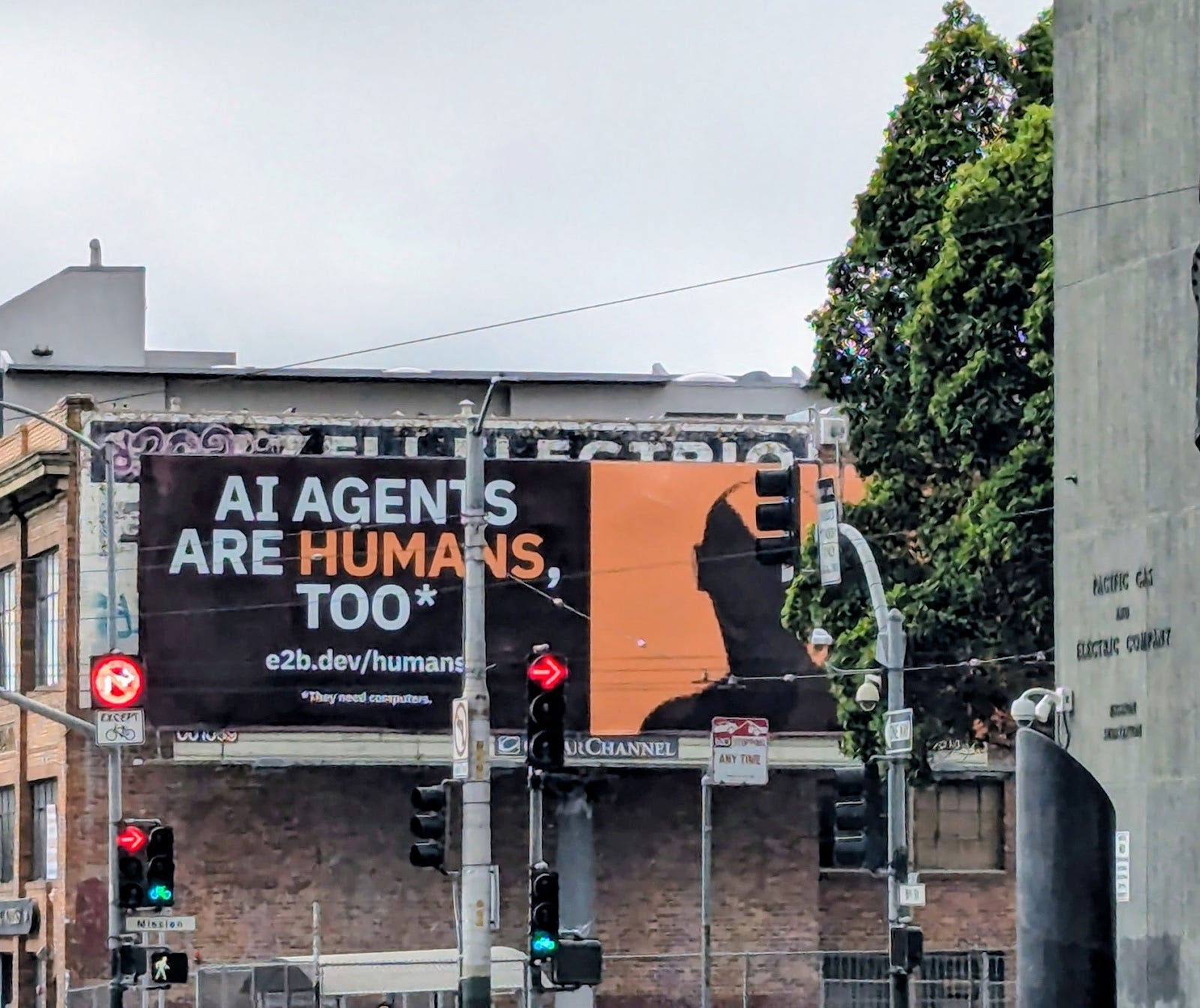
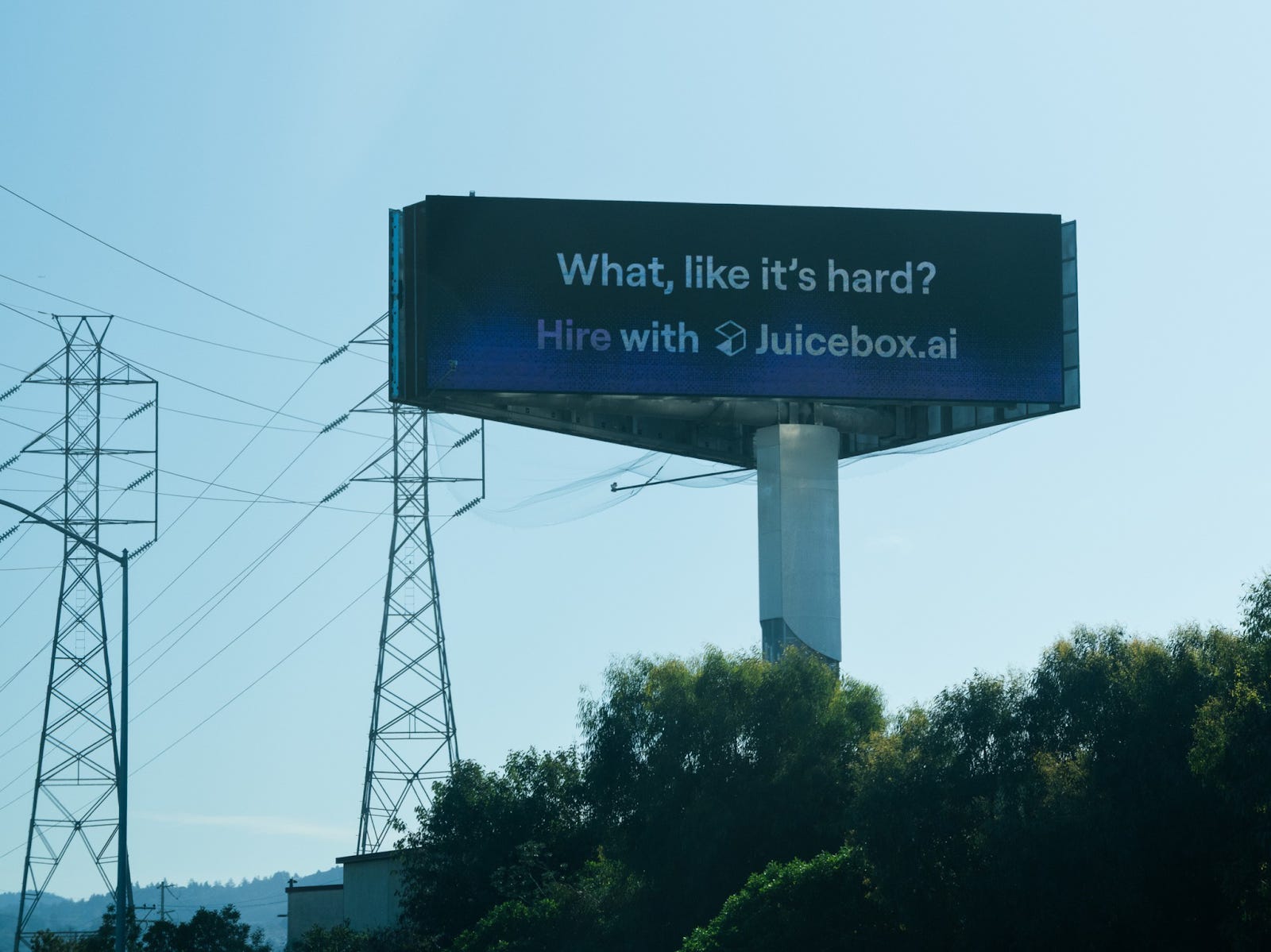
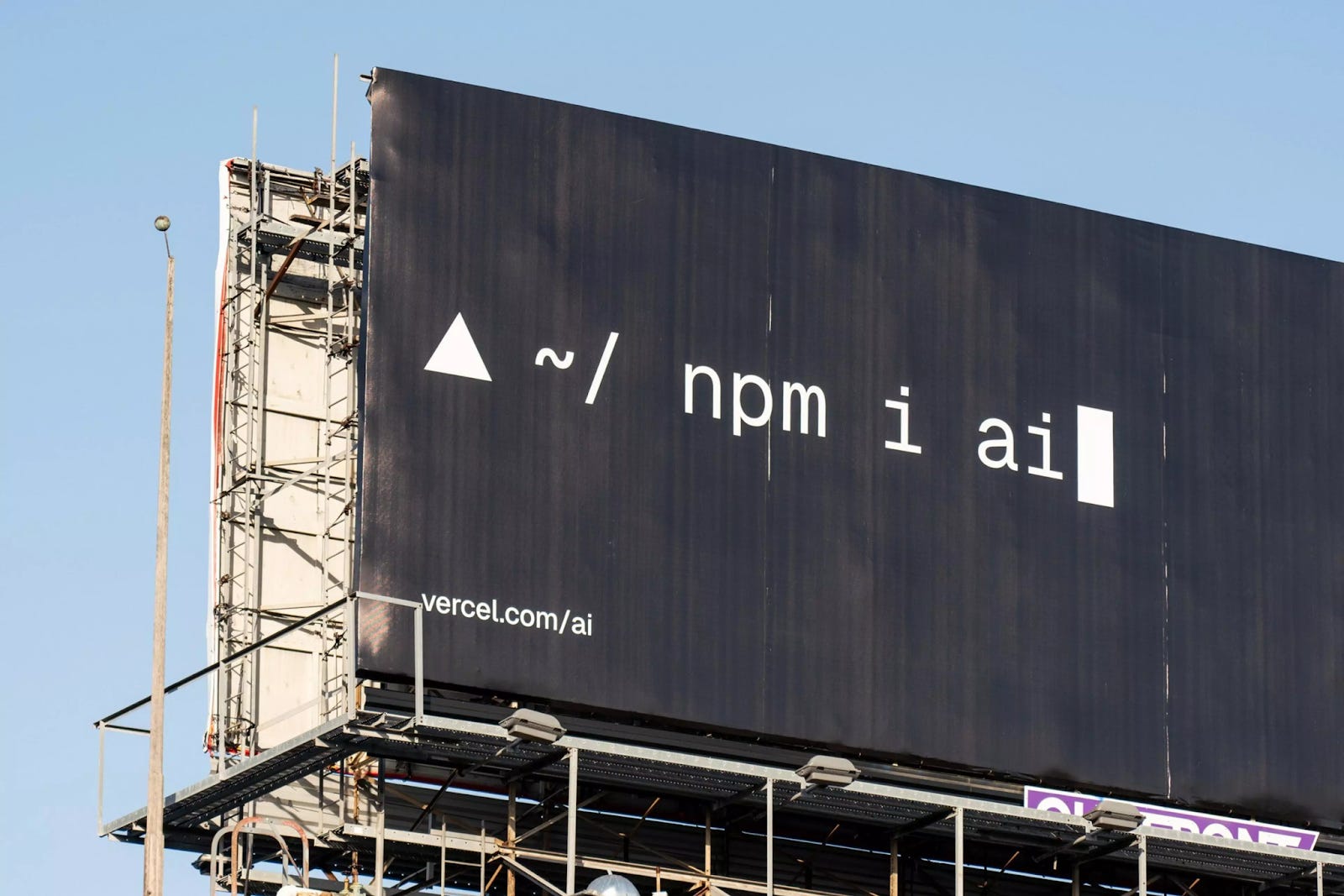
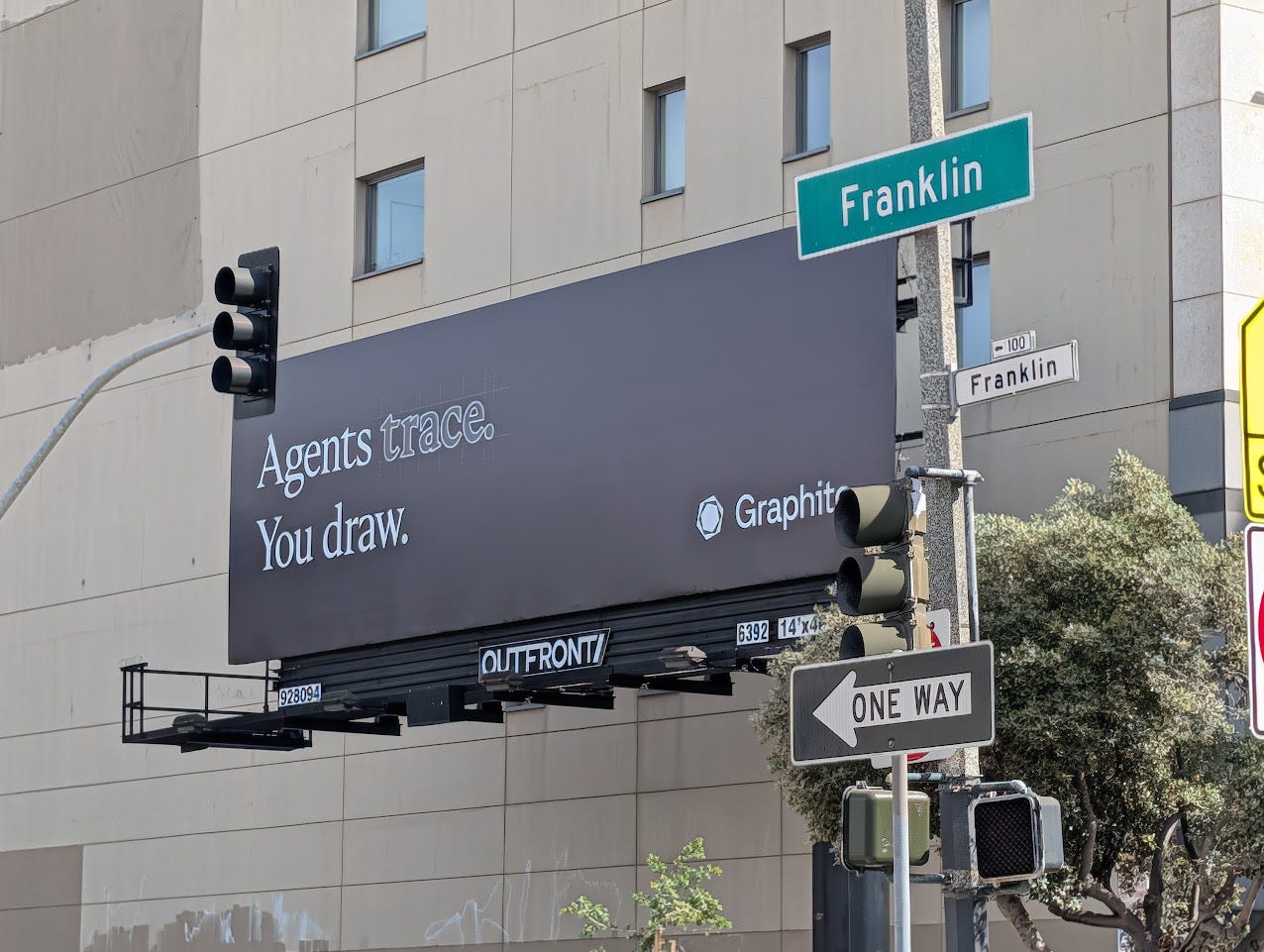
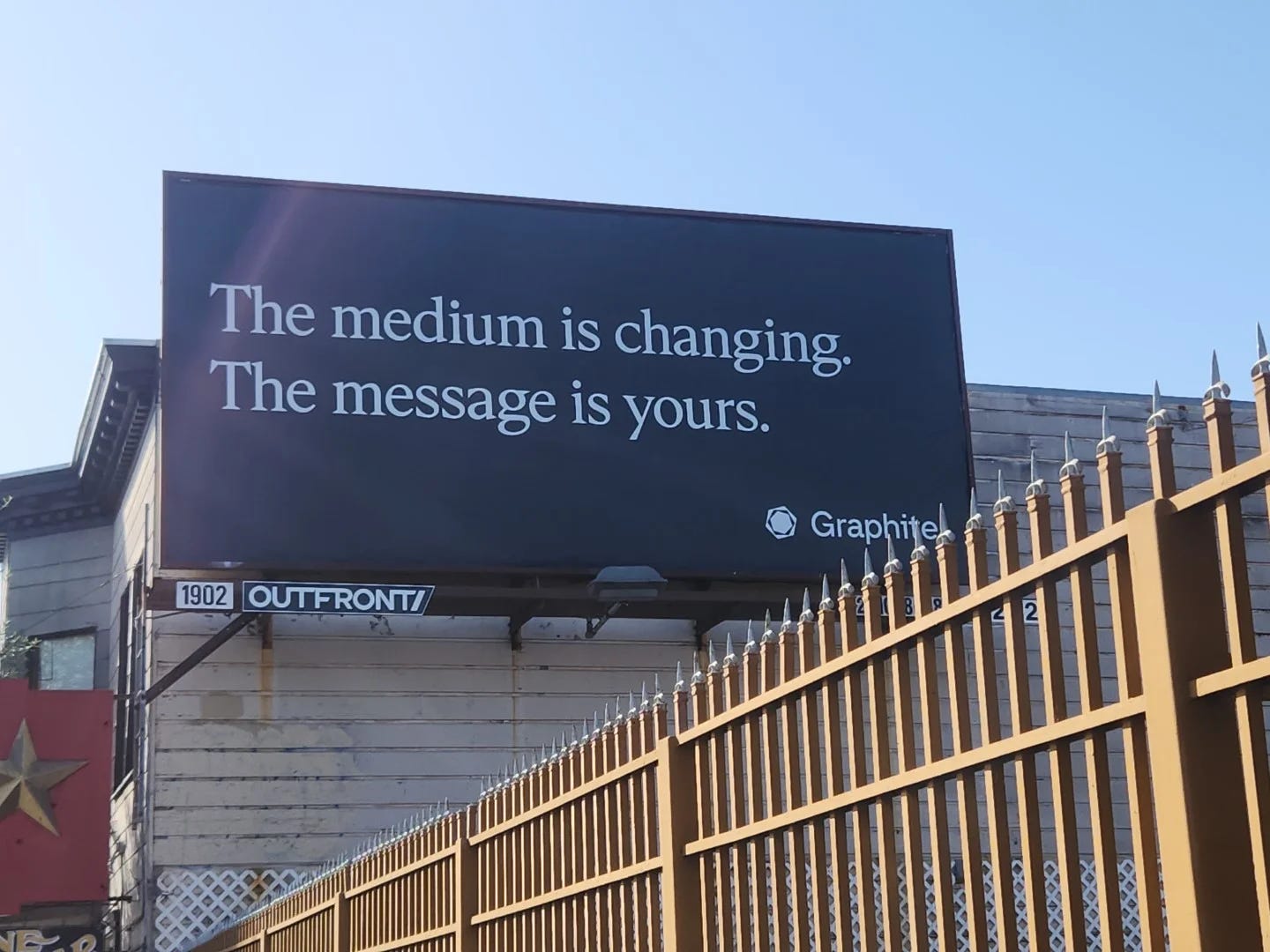
AI billboards remain inscrutable.2
I saw a few from graphite in particular that I really didn’t get, all playing with this same “art” theme. I think the idea is that if you just put the graphite logo next to a bunch of arty-sounding platitudes, people will associate graphite with feeling artistic? But it feels like a tenuous connection at best.
A year ago, when I last wrote about the Bay, I was surprised and dismayed to find that edgy right wing black pilled nonsense was considered ‘cool’. I met several people with really just rancid politics, people who were unabashedly pushing insane far right ethnonationalist conspiracies. The general sentiment was that Kamala and the libs were stodgy and old and uncool, and Joe Rogan and the other podcasters (SF loves podcasters) were cool and increasingly not libs. This is why Curtis Yarvin, jester of the new right, had his own group house, his own house parties, complete with the acolytes and the entourage and so on.
I’m happy to report that most of that is gone.
Sometime in the last 6 months, everyone collectively decided that being super right wing is actually really cringe. A lot of people tempered their previously vocal opinions. Others, who stuck to their nihilism, were just increasingly not invited to parties. No one really talks to or about Yarvin anymore.
It’s hard to say what, exactly, led to the change. One friend said that Anthropic was ascendant and was single handedly making the left cool again. Another hypothesized that the Iran war was hurting San Francisco’s wealthier residents (you need helium to make chips, after all), and because those people host all the events, the increasing disdain trickled down into the water supply. A third said that it was all just becoming too hard to defend, that the incoherent whiplash made any kind of principled position impossible.
But regardless of the reason, everyone agreed: “wow, it’s kinda really embarrassing that we spent so much of last year partying with real life eugenicists.” No, really?! You think so?!
Something that surprised me: the new Tesla self driving model is actually very good. I had mostly been of the opinion that Tesla would always struggle to really provide a good self driving experience, because they didn’t have lidars or other sensors (something I wrote about here). Every time I had been in a self driving Tesla, I’d been very much afraid for my life — the thing was way too aggressive, took turns stupidly fast, and regularly had to be stopped before crashing into something.
But (according to friends with Teslas) about 6 months ago the model updated and now everything is gravy. My buddy drove his Tesla from SF to Santa Barbara and said he never touched the wheel.
It’s true that the Tesla’s still aren’t as good or as safe as the Waymos. But they are way better than human drivers and, more importantly, can drive anywhere. If I had to choose, I’d take a free roaming mostly autonomous vehicle over a location fenced fully autonomous one every time.
Very curious what led to the improvements. More data? Better sim? More compute? If you’re at Tesla and you have some insight here, drop me a line!
On our first day in SF, Mia and I did a brunch double date with an old friend from highschool. Normally this wouldn’t be relevant, but it’s worth mentioning that said friend is gay. This is worth mentioning because, while describing SF to Mia, he went on a long and surreal tangent about the “warehouse full of twinks down in Soma”, and I wanted to type the phrase “warehouse full of twinks” while making it as clear as possible that these were not my words.
On the one hand, this is an incredibly information dense phrase. What is it? A warehouse. What’s inside? Twinks. How many? A warehouse full.
On the other hand, what do you mean “warehouse full of twinks”???
“O, you know.”
No, Steve, I do not know!
Trying to get a handle of the situation, I asked some follow ups in the hopes that I would get something more legible.
Me: “What, exactly, do they do at this warehouse?”
Steve: “They chant to Claude about their desires.”
Me: “They…chant to Claude?”
Steve: “Sometimes ChatGPT”
Me: “Why?”
Steve: “They want to escape the permanent underclass by building b2b SaaS.”
Me: …
Steve: “they also fry their brains on Twitter. The twinks there aren’t getting enough sleep, it’s like rows and rows of tired twinks doom scrolling Twitter 40 hours a day while they chant to their machine god”
Me: “...are they happy? Like do they know that this isn’t the good life?”
Steve: “no one is making them stay in the warehouse. Also they have good parties”
My friend is a bit of an eccentric character, so I mostly assumed he was exaggerating. But maybe twenty minutes later, a girl pops by our outdoor table, and Steve just lights up. “Amol, Mia let me introduce you, this is my friend who runs the warehouse full of twinks I mentioned earlier.” Turning to our guest “We were literally just talking about you, how are the twinks?”
“O they’re good, working hard on escaping the underclass.”
???????
After a bit more conversation, I eventually piece together that this project started as a group house run by 19 year olds, one of the people in the group house had some kind of startup exit and decided to use the money to buy a warehouse, and it eventually became / doubled as a co-working space. “We have a digital sculpture that’s a pile of retro TVs in the center of our co-working space that we sacrifice goats to” I’m sure you do.
There are many forms of AI psychosis. Most people are familiar with the strain that breaks up relationships, where an overly sycophantic AI basically acts as the world’s worst relationship therapist by mimicking an AITAH comment thread (“ooo your husband of 7 years didn’t take out the trash on Tuesday? yea that’s a red flag, break up with him now.”) But I’m here to tell you that there is a unique strain that is prevalent in SF, that seems to only infect engineers.
It starts benignly enough. An engineer will set up Claude Code and try it out, making a little hobby project like a game or a web app. It will feel easy. In fact it will feel too easy. Here, the engineer makes a critical mistake: they begin to believe that everything that was previously hard must now be easy. They will build bigger and bigger applications, fed by the validation of creating and merging prs. They start building more things themselves. Who needs npm packages, who needs infrastructure, build your own containers and kubernetes and AWS. Things will spiral in complexity, bugs keep popping up but the AI always sounds optimistic, always on the verge of a break through, “Now I see the issue.” Soon the engineer is a husk, just clicking approve on everything while running ten agents at the same time. Yes, it’s true, code is being written, features may even be shipped. But the engineer has forgotten the number one rule: the best code is no code.
When someone comes to you and says that they’re going to make their own programming language because Claude said it would be faster than rust and easier to use than Python, they’re too far gone.
Mia says that SF feels like highschool.
SF has a population of about 850k. This is way smaller than I thought, especially given SFs cultural weight. NYC by comparison is a city of 8 million.
Of that 850k, 20% or so are between 18-35, and 20% or so work in tech. If you assume there’s no correlation between these things, you get ~34k people. That’s bigger than most highschools, but still roughly the size of a mediumish state school. I think you could cut it down a bit further — works or has worked in startups, is likely to go to a house party, has been in the Bay for more than a year. The point is that you pretty rapidly get to a group of people where it feels a bit like everyone knows everyone else, or is at least one hop connected to everyone else. Like, in my own network, I’m pretty sure I’m one hop connected to basically every famous tech billionaire, and that’s just because I happen to know a bunch of people who live in SF and go to parties.
This can sometimes make SF feel a bit like that scene in Mean Girls, where we get a rundown of the social graph through where people sit for lunch. There’s the crypto bros and the ai doomers, the big tech lifers and the creative coders, the health maxxers and the kinda scary powerhouse PMs. The group house culture and the social dynamics of the VC accelerators exacerbate the effect.
For a town that is ostensibly focused on tech, the only thing everyone talks about is the people. She’s dating who? They had a founder breakup? Wait he’s working where now? It’s a mix of “highschool social graph” and “celebrity gossip.” Extremely potent combination.
Anecdotally, I think this leads to some pretty aggressive stereotyping, as people try and fit you into one of the tables. I notice a lot of folks lean into the stereotypes, especially founders. It makes them legible. If you’re selling peptides, it helps your business to make your whole personality ‘peptides’. That’s how you get referrals! “O you’re looking for peptides? Let me hit up my peptide guy, he knows everything about peptides.” A good friend of mine moved to LA to work in show business. When he went down there, he changed his name to “Sven” because it was more memorable. In a town where ‘who you know’ determines whether or not you have a job next month, social currency has an exchange rate to USD. In this, SF isn’t all that different.
My SF based friends object to the highschool metaphor. It’s not tables at lunch, it’s techno-feudal houses.
There’s House Altman and House Amodei. There’s House Musk and House Zuckerberg. There’s House Brin and House Jensen (for some reason this one isn’t a last name). And underneath the Great Houses are their bannermen, like Ser Dwarkesh, a member of House Amodei; or Ser Roon, a longtime member of House Altman. Sometimes the bannermen can switch allegiances, as when Ser Alexandr Wang of the minor House Scale betrayed House Altman and joined House Zuckerberg.
On the one hand, I think this is mostly tongue in cheek. On the other, this is a very high sincerity group. And I think back to the warehouse, and the talks of “permanent underclass”, and wonder if maybe those peptides are responsible for more than just a few dropped pounds.
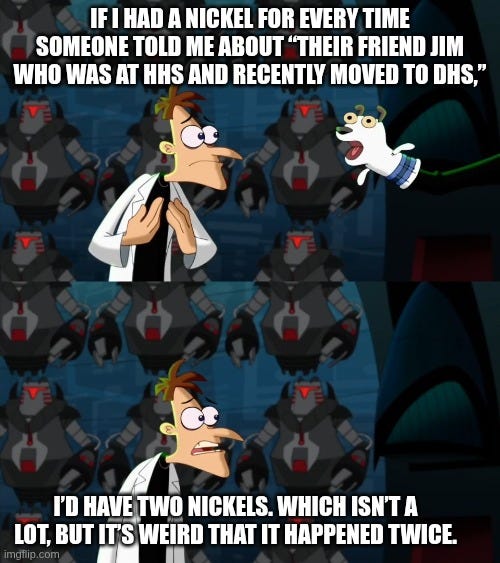
If I had a nickel for every time someone told me about “their friend Jim who was at HHS and recently moved to DHS,” I’d have two nickels. Which isn’t a lot, but it’s weird that it happened twice.
A few folks asked me what it was like running an AI company in NYC. I think they mostly expected me to say that it was a lot harder, that I was sacrificing access to clients and talent and marketing opportunities by stubbornly staying out in the East Coast. I can see why they’d think so — building with AI is so common in SF that it has become old news. There are few places in the world where people have thought as much about AI best practices.
But that exact trend is why I prefer building in NYC. Every single person that I met in SF was dangerously opinionated about AI best practices. It is impossible not to be! When everyone is constantly jumping from idea to idea, trying to stay on top of the Twitter firehose, you need some kind of opinion just to stay relevant and sane. So I met dozens of people building complicated multiagent harness systems with all sorts of handoffs and state tracking and pipelining, vibe coded scaffolding for vibe coding more scaffolding. Did it actually result in better products? Better code? Could you do more with less? These questions never came up.
I like building in NYC because I can talk about results instead of trends. Nothing, and I mean nothing, is set in stone anymore. Every part of every organization is reinventing best practices from the ground up. In that environment, the worst place to be is in a bubble. And SF is very much a bubble, a really really noisy one. It’s super hard to burst through with good foundations level thinking, even if you have good results, because it’s not ‘hype’ enough. In NY I can sell on what actually works instead of on blindly following whatever Karpathy posts about this week.
I think eventually there may be some need to focus more on the Bay, but for now I don’t feel any cost at all from building in NY.
Even though I got to catch up with friends — including some of you folks who read this blog! — and do my bi-annual data gathering trip, it’s nice to be back home. Sleeping on 7 couches in 13 days doesn’t quite work as well once you hit 30. At some point I suppose I’ll just start getting hotel rooms.
Which may be sooner rather than later. My rate of travel to the West Coast is picking up.
I don’t lead what you would call an active lifestyle, so two days of 30k+ steps basically knocked me out
Note: some of these pictures I took from the web because I didn’t have the foresight to take the photo when I first saw it, or because I was driving by and couldn’t get my phone out fast enough.
I laughed more at the Mythic Twink Warehouse part more than I’ve laughed at anything for a week. But mostly I find it all insane; I’ve been on the periphery of Weird Scenes (TM) before, and I always come away realizing that the most powerful and “innovative” people are just totally flawed randos, often with various levels of sociopathy, who just win a momentary plinko game.
“But the engineer has forgotten the number one rule: the best code is no code.” — Wisdom was dropped